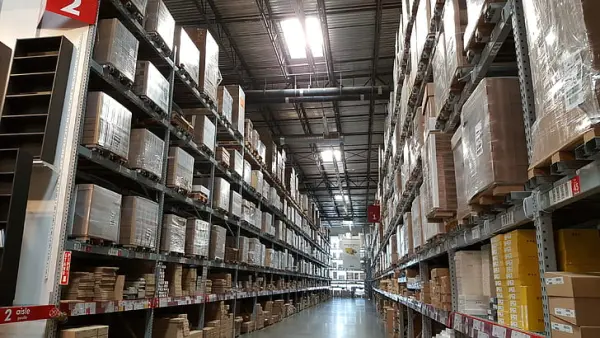
Managing in-house warehouse operations requires extensive investment in real estate, staffing, equipment and technology. For small and mid-sized businesses, handling these complex logistics can divert focus and resources from core business goals. Outsourcing warehousing and fulfillment operations to a Third Party Logistics (3PL) provider offers immense strategic and cost benefits.
What is 3PL Warehousing?

A 3PL (third-party logistics) warehouse is an offsite storage facility managed by a logistics solutions provider, offering a suite of services to enhance supply chain efficiency. These services include:
- Inventory Storage: Secure and scalable storage solutions for inventory, accommodating fluctuating space requirements.
- Receiving and Inspection: Accurate verification of shipments and quality inspection to ensure defect-free storage.
- Efficient Putaway: Optimized product placement for space utilization and accessibility.
- Order Fulfillment: Streamlined picking and packing processes, coupled with cost-effective shipping coordination.
- Transportation Management: Oversight of transportation logistics from production to warehousing.
- Returns Management: Efficient processing of returns, including inspection, restocking, and refund handling.
- Inventory Tracking: Advanced warehousing technology for real-time inventory monitoring.
- Reporting: Detailed operational analytics and insights to inform sales strategies.
By using a global logistics network and outsourced logistics services, 3PL warehouses enable businesses to focus on money making opportunities, such as sales growth and product development, while benefiting from cost reduction strategies and e-commerce fulfillment services.
This partnership ensures scalability and flexibility in logistics, essential for adapting to market demands and optimizing inventory management
Want a quick answer on why you should choose a 3PL Warehousing for your Ecommerce business?
- Eliminates large fixed costs that come with maintaining an inhouse warehouse such as warehouse rentals, material handling equipment, IT infrastructure, and labor.
- Helps scale your business at a rapid rate nationally or globally.
- Gives you more time to focus on marketing your products.
- Access to warehouse management software (WMS), Supply chain management (SCM), Customer Relationship Management (CRM), and Enterprise Resource Planning (ERP).
3PL Warehousing Services You Might Benefit From
3PLs provide a range of value-added services beyond just storage like:
- Kitting and product assembly
- Packaging customization
- Inventory cycle counting
- Cross-docking
- Vendor management
- Freight bill auditing
- Warehouse network optimization
- Robotic process automation
- EDI
- API Integration
- Order/inventory visibility through dashboards
- Analytics
- Algorithms for optimizing slotting
- Robust warehouse management systems
- Automated data collection tools
Key Benefits of 3PL Warehousing
Save on Costs
Outsourcing to a 3PL warehouse reduces fixed costs like rentals, equipment, IT, and labor, while optimizing logistics spending through expertise in managing diverse businesses and industries.
Partnering with a 3PL allows companies to focus on core competencies, enhancing scalability, flexibility, and customer satisfaction. 3PLs offer comprehensive logistics solutions, including packaging, warehousing, transportation, and order fulfillment, leading to cost savings, advanced technology access, and improved service quality
Scalability and Flexibility
Choosing a 3PL warehouse offers flexibility for businesses, allowing them to scale operations up or down based on demand fluctuations.
Before peak season, confirm what the 3PL can add and how much notice it needs. Ask about extra receiving appointments, storage space, staffing, and carrier pickups. Compare those commitments with your forecast for your busiest week.
Improved Efficiency
Outsourcing fulfillment to a 3PL allows businesses to focus on sales, marketing, and product development by entrusting order processing, inventory control, packaging, and shipping to experts. 3PLs offer well-established systems, trained staff, and quality control processes for high order accuracy and fast delivery times.
Their customer service teams efficiently resolve issues, enhancing customer experience and satisfaction. By partnering with a 3PL, businesses can allocate more resources to driving demand, launching new products, and expanding to new markets
Enhances Your Customer Service

Third-party logistics providers (3PLs) like Tactical Logistic Solutions optimize warehouse operations for efficiency. They streamline processes, layouts, and workflows using advanced warehouse management systems and skilled staff, improving picking, packing, and shipping speed.
This enhances throughput, productivity, inventory accuracy, and order fulfillment precision. Tactical Solutions offers expertise in assessing and improving fulfillment operations for better speed and accuracy. Contact us today
Are you looking to expand your business with a 3PL in New Jersey, California, or New York?
Saves Time to Focus More on Your Business
Outsourcing warehousing management allows executives to focus on core competencies such as product development and service quality, leading to increased efficiency and competitiveness.
Access to Warehousing Software

Outsourcing to a 3PL grants access to advanced warehouse management systems, inventory tracking, and shipping software, enhancing operational transparency and insights.
Here are some tech that 3PL companies use:
- Warehouse Management (WM) Software manages 3PL operations, handling complex workflows and inventory for multiple clients, and allows customization for billing, reporting, and labeling.
- Supply Chain Management (SCM) software oversees the supply chain, including product development, sourcing, manufacturing, inventory, warehousing, and delivery, offering scalable solutions.
- Customer Relationship Management (CRM) software manages customer interactions, uses data analysis for improving relationships, retention, and sales, and tracks leads, sales, orders, and deliveries for 3PLs.
- Enterprise Resource Planning (ERP) software integrates various functions like HR, IT, and services, connecting logistics, accounting, and sales for 3PLs, streamlining operations and enhancing efficiency and scalability.
Global Expansion
For businesses looking to expand into new regions, a 3PL with locations worldwide makes it faster and easier to enter new markets.
Using modern transportation methods, 3PL companies help open your market reach to global levels.
Key Considerations for Choosing a 3PL

Give each provider the same operating profile: pallets on hand, inbound loads per week, SKU count, orders by channel, and volumes in a typical week and your busiest week. Score each provider against the same requirements so you can compare what the quotes cover.
- Receiving and storage. Ask how long it takes from a booked dock appointment to inventory showing as available. Confirm pallet and SKU requirements and who handles shortages, damage, or labeling exceptions.
- Replenishment and throughput. Ask how many pallets or orders the site can receive and ship in a normal week and a peak week. Check order cutoffs, carrier pickups, and how much notice the site needs for a surge.
- Channel and regional coverage. Confirm which locations handle your parcel orders, retail shipments, and marketplace replenishment. Ask for a reference from a brand with a similar channel mix or inventory profile.
- Systems and inventory visibility. Ask for a live walkthrough from receipt to shipment. Check how the warehouse system syncs inventory, orders, and tracking with your systems and how both teams resolve discrepancies.
- Pricing and minimums. Have each provider price the same month of activity. Compare receiving, storage, outbound handling, special projects, and minimum charges using the same volumes.
- Service levels and escalation. Put receiving and shipping targets in writing. Name the owner on each side and agree on how to report missed cutoffs, inventory discrepancies, or repeated errors.
If you’re still deciding whether to outsource, compare the quote with what you spend in-house on space, labor, software, and peak capacity. If the numbers work, run a representative shipment or order batch before moving the full inventory.
FAQs
How Can a 3PL Warehouse Save Me Money?
By outsourcing to a 3PL, you save on infrastructure, personnel, and equipment costs. Additionally, 3PLs often offer bulk shipping discounts, which further reduce your expenses.
What Types of Flexibility Do 3PL Warehouses Offer?
3PL warehouses offer customized services, allowing you to pay only for the services you need at any given time. This flexible approach is particularly useful for adapting to seasonal demand fluctuations or market changes.
How Do 3PL Warehouses Ensure Safety and Regulatory Compliance?
3PLs are experts in adhering to shipping laws and safety regulations. They employ industry best practices to ensure your products are stored and shipped in compliance with legal standards.
Can a 3PL Warehouse Streamline My Business Processes?
Absolutely. 3PLs have expert-designed systems that optimize logistics, reduce waste, and lower costs, thereby streamlining your business processes.
How Can a 3PL Warehouse Reduce Business Risks?
By handling the complexities of logistics, 3PLs minimize the risks associated with shipping delays, inventory management, and other logistical challenges.
Can Using a 3PL Warehouse Give My Business a Competitive Advantage?
Yes. Leveraging the expertise and capabilities of a 3PL allows you to provide better service to your customers, thereby gaining a competitive edge in the market.
How Does a 3PL Warehouse Allow Me to Focus on Core Competencies?
With a 3PL handling the logistical aspects of your business, you can devote more time and resources to areas like product development, marketing, and customer relations, which are crucial for business growth.


