Between December 5 and 25, your holiday logistics setup is either quietly doing its job in the background… or it’s the reason you’re refreshing tracking pages at 2 a.m.
In this article, we’ll run through what matters most in that December 5–25 holiday peak-season window, and how Tactical thinks about each piece so you can keep selling, not scrambling.
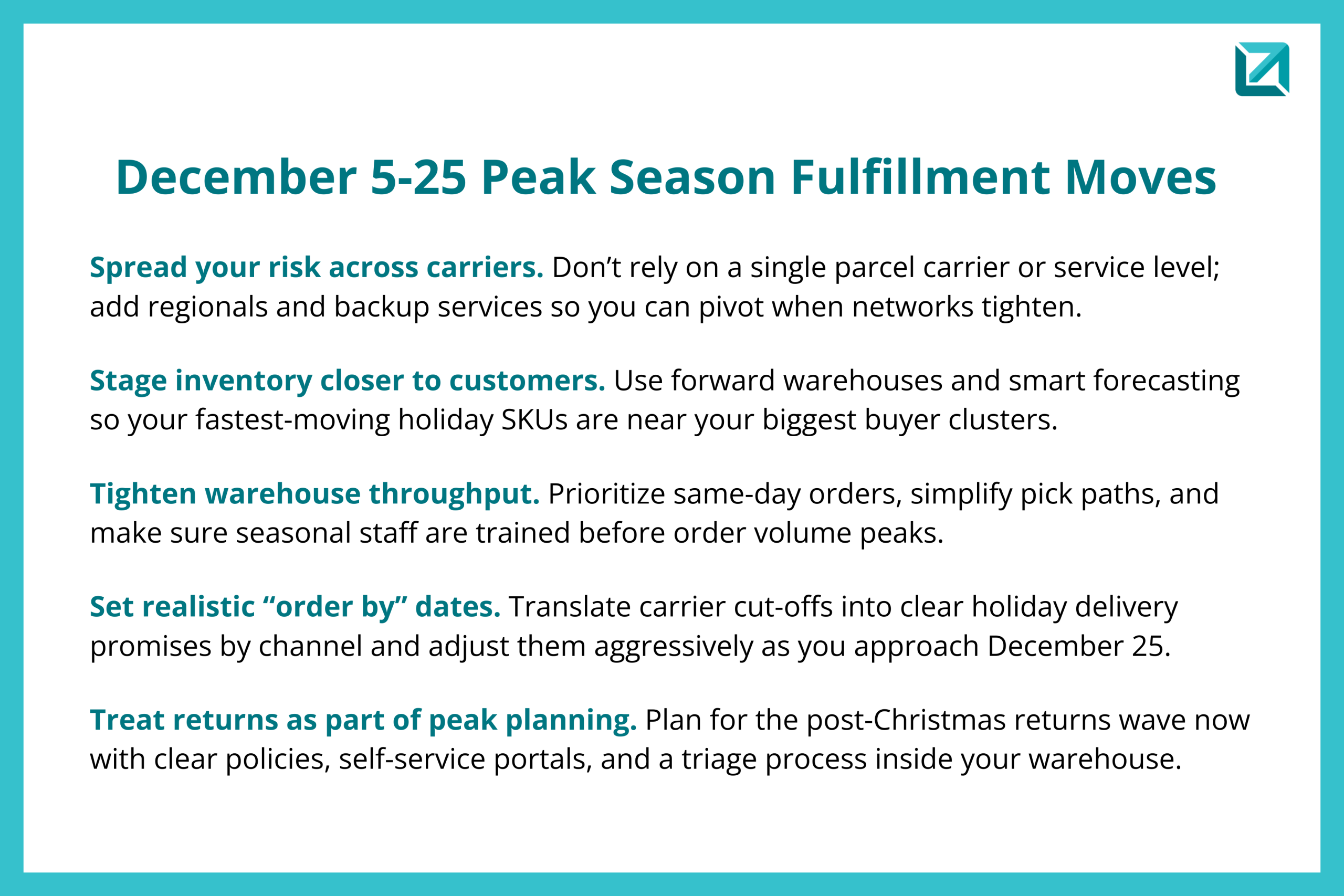
Short on Time? 5 Holiday Peak-Season Moves to Make Now
If you’re skimming this on your phone between meetings, here’s the quick version of what to focus on between December 5–25:
📘 Want the bigger picture?
Download Tactical’s free 2025–2026 Supply Chain Ebook for a deeper dive on tariffs, Amazon fee changes, AWD vs. 3PL storage, and how to protect margin while you scale.
Demand, Capacity, and Carrier Constraints
Holiday parcel volumes keep rising, even as carriers push through rate increases and peak surcharges. That combination—more volume on more expensive, more constrained networks—creates a perfect storm in the final stretch of December.
From an e-commerce brand’s point of view, that looks like:
-
Daily order spikes that are 2–5x your “normal” volume
-
Hard caps on certain services or lanes as carriers protect their networks
-
Weather and traffic disruption that can blow up even well-planned routes
-
Last-minute surcharges that quietly erode your margin on every order
If you’re relying on a single carrier or a single service level for holiday peak season, you’re vulnerable. When that carrier hits its limit or deprioritizes your volume, your orders sit.
What to do between December 5–25
-
Use multiple carriers, including regionals. Regional carriers and local couriers can absorb volume when national networks are backed up.
-
Secure capacity before mid-December. This is not the time to be begging for extra volume allocations. Work with your 3PL or carrier reps to lock in capacity ahead of time.
-
Keep backup services in your routing logic. If your primary service hits a constraint, you shouldn’t be scrambling to re-rate orders manually.
How Tactical helps
Tactical works with FedEx, FedEx Ground, UPS, Amazon Freight, Amazon Logistics, DHL, USPS, and regional carriers, so you’re not betting your holiday season on a single network. We plan capacity across all of those partners, then route order by order based on cost, speed, and actual network performance as December unfolds.
Want to diversify your carrier network? Book a call with the Tactical team.
Inventory Forecasting and Placement for Holiday Demand
Once carrier networks start slowing down in mid-December, stockouts and overselling get a lot harder to recover from. That’s why forecasting and inventory positioning are just as important as carrier selection for holiday peak season.
Key principles:
-
Forecast using real-time data. Historical Q4 data still matters, but paid media performance, TikTok trends, and marketplace velocity in November and early December are often better predictors of what’s coming.
-
Lock your regional inventory positions early. By the time you’re in the December 5–25 window, you want your inventory close to your customers—not stuck at origin or in a single national node.
-
Prioritize your fastest-moving SKUs. If everything can’t be everywhere, your top holiday SKUs need to be closer to your biggest customer zones.
AI-enabled forecasting and automated replenishment (through barcode/RFID and a connected WMS) can help you keep high-velocity SKUs available while reducing manual errors at the worst possible time.
How Tactical helps
Because Tactical was built by former Amazon sellers, we think in terms of buffer stock and optionality, not just “units on hand.”
In practice, that means:
-
Using our fulfillment centers to stage inventory close to major customer zones and Amazon hubs
-
Keeping buffer inventory in Tactical’s 3PL network instead of locking everything in FBA when fees and timelines spike
-
Coordinating freight forwarding, cross-dock, and FBA prep so containers arrive pre-palletized, pre-labeled, and ready to flow right into Amazon, D2C, or both
Pair this with the fee and tariff guidance in our 2025–2026 Supply Chain Ebook, and you’ll have a clearer picture of which products and lanes deserve extra holiday buffer.
Warehouse Operations and Staffing Under Holiday Pressure
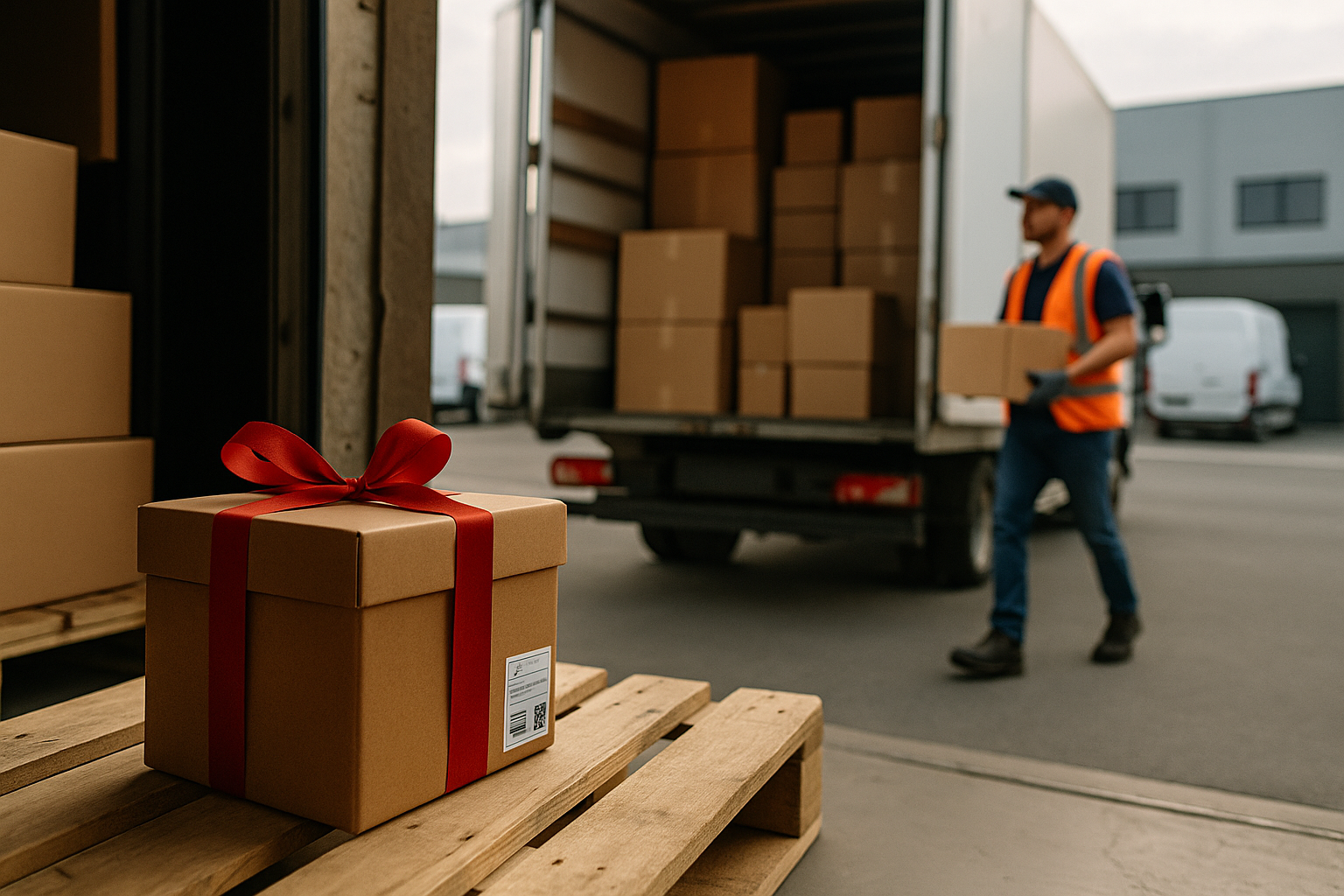
Even if your inventory is in the right place, slow warehouse throughput can still wreck your holiday customer experience.
Peak-season best practices inside the four walls include:
-
Clear priority rules. Same-day cut-off orders and expedited services should be at the front of the line.
-
Simplified pick paths. Grouping fast-moving SKUs and using batch or zone picking prevents your team from zig-zagging across the floor all day.
-
Temporary automation. Conveyor systems, scan-to-pack workflows, and cartonization tools can dramatically reduce handling time for high-volume SKUs.
-
Cross-training and seasonal staffing. Labor shortages are common in picking and packing. The most resilient operations recruit and train seasonal staff before December and cross-train core teams to cover key stations.
Without these measures, the choke point shifts from the carrier network to your own warehouse during the most important shopping days of the year.
How Tactical helps
Because we know the shape of Q4 seasonality, we ramp staffing and shifts before the holiday crunch hits, and we separate workflows by channel:
-
FBA prep and cross-dock for Amazon sellers who need fast inbounding and tighter control than AWD alone
-
D2C order fulfillment for Shopify, TikTok Shop, Walmart, and other channels
-
Hybrid models where the same inventory can support FBA, FBM, and D2C as needs shift
Our WMS prioritizes orders automatically based on service level and cut-off times, so you’re not relying on manual judgment with thousands of holiday orders in the queue.
Holiday Cut-Off Dates, Last Mile, and Service Promises
Cut-off dates are where holiday logistics and marketing either work together—or clash.
Most carriers and marketplaces publish their recommended last-ship dates for pre-Christmas delivery well before Q4. For brands, the work is:
-
Turning those carrier dates into clear “order by” deadlines by channel and service level
-
Updating those promises as you get closer to Christmas and networks get tighter
-
Offering alternatives (like local delivery, same-day options, click-and-collect, or digital gift cards) once the most popular lanes are no longer realistic
Two key checkpoints between December 5–25:
-
“Green Monday” (roughly the last Monday with ~10 shipping days left): last call for many standard services.
-
Final pre-Christmas weekend: when promises should pivot aggressively toward expedited, local, or non-physical options.
On the last-mile side, route optimization and dynamic routing based on real-time traffic become essential. The goal is to keep delivery density high without sacrificing on-time performance.
How Tactical helps
We work with brands to:
-
Map realistic holiday cut-offs for Amazon, D2C, and other channels based on their SKUs, carriers, and customer locations
-
Keep FBM or D2C backup offers live when FBA inventory runs tight, so you avoid full stockouts and protect your Amazon rank
-
Use multi-carrier routing, regional carriers, and local options where it makes sense to keep later cut-offs viable
If you decide to spin up D2C or TikTok fulfillment mid-season, we can connect your sales channels and map SKUs into Tactical’s WMS quickly, so you’re not waiting until Q1 to start selling through that inventory.
Set up a call to discuss your D2C fulfillment opportunity: Book a call with the Tactical team.
Returns and the Post-Purchase Holiday Experience
The order isn’t “done” when the package lands on the porch—especially around the holidays.
Extended return windows into early or mid-January are now standard, and the “returns wave” often hits just as you’re trying to reset for Q1. That wave affects:
-
Carrier capacity, as return labels re-enter parcel networks
-
Warehouse throughput, as items come back needing inspection, disposition, and restocking
-
Customer loyalty, depending on how simple or painful the process feels
Holiday peak-season best practices for returns include:
-
Easy online returns portals, with clear status updates and self-service label generation where appropriate
-
Exchange and store credit options to retain revenue when customers change their mind
-
Pre-planned warehouse workflows for returned goods (restock, refurbish, liquidate, dispose), so returns don’t clog inbound docks
-
Proactive tracking and exception alerts when networks are strained, so your support team isn’t blindsided
How Tactical helps
Tactical’s reverse-logistics workflows for both Amazon and D2C are built to:
-
Receive, inspect, and triage returned units quickly
-
Separate inventory that can go back to FBA, stay in D2C, or be liquidated
-
Feed that data back to your team so you can adjust future purchasing, pricing, and promotions
Don’t Forget Holiday Cash Flow
All of this planning – extra inventory, diversified carriers, better returns handling – depends on one thing: having the cash to execute during holiday peak season.
Higher tariffs, freight costs, and marketplace fees have squeezed margins. Meanwhile, marketplaces like Amazon often hold a significant portion of your December revenue in reserves until mid-January, right when you need to place new POs.
That’s why we talk about logistics, inventory, and funding in the same holiday conversation.
Through partners like Capec, sellers can:
-
Finance a large share of manufacturing POs and shipping costs
-
Align repayment with actual sales and marketplace payouts
-
Avoid stockouts in Q4 by funding the extra inventory needed when demand jumps 4–5x
Bringing Your Holiday Peak-Season Plan Together
Between December 5 and 25, the brands that win holiday peak season are the ones that:
-
Treat carrier capacity as a strategic asset, not an afterthought
-
Put inventory where it can actually move, across Amazon and D2C
-
Keep warehouse cycle times tight, even with seasonal staff
-
Adjust delivery promises in real time as cut-offs pass and networks strain
-
Make returns and refunds feel simple, without destroying margin
-
Plan their cash flow so they can order and move enough inventory to meet demand
Tactical Logistic Solutions was built by sellers who have lived through the “one delayed trailer ruined our Q4” nightmare.
Today, we help brands turn that risk into a more predictable, multi-channel holiday strategy, supported by the right funding and the right logistics partners.
Want to stress-test your December-January logistics plan?
-
👉 Book a call with Tactical to review your capacity, cut-offs, and channel mix
-
👉 Download the 2025–2026 Supply Chain Ebook to understand how fees, tariffs, and storage changes will impact your bottom line