Q4 storage rates started October 1, and Amazon takes its next aged inventory snapshot on November 15.
Between now and January, most of the margin sellers lose leaks out of 2 piles of inventory: the slow movers sitting in FBA, and the returns that stack up after the holidays. Neither shows up on a sales dashboard until it’s already expensive.
The inventory most likely to eat your Q4 profit is the stock sitting in Amazon on the assumption that peak season will sell it through.
Holding Slow Stock for Q4 Means Paying Peak Rates to Find Out
Amazon’s standard-size storage rate went from $0.78 to $2.40 per cubic foot on October 1, roughly 3 times the off-peak rate. It applies to every cubic foot in the building, whether that unit sells this week or in March.
The pattern repeats every fall. A SKU slows down, pulling it feels premature, and the plan quietly becomes waiting for Q4 to clear it.
A Tactical review of one large seller’s account in early December found 40 pallets of slow movers sitting in FBA. He’d been pushing for lower logistics rates, while a big share of his missing margin was going to storage on product that wasn’t moving.
Here’s roughly what a position like that costs per month at this year’s rates.
| Monthly storage on 40 pallets of standard-size inventory (about 2,400 cubic feet) | ||
| Scenario | Rate per cubic foot | Monthly cost |
|---|---|---|
| Off-peak month, January to September | $0.78 | $1,872 |
| Peak month, October to December | $2.40 | $5,760 |
| Peak month, units aged 271 to 300 days | $2.40 + $5.45 aged surcharge | $18,840 |
The math assumes about 60 cubic feet of product per pallet, so treat it as an illustration of the shape rather than that seller’s actual bill. Each row repeats every month until the units sell or leave.
That seller now runs a 60-day rule. He keeps 60 days of inventory in Amazon, replenishes against it, and sends nothing beyond that.
The floor matters as much as the ceiling. Amazon charges a low-inventory-level fee when a product’s historical days of supply drops below 28, so a best seller that runs too lean pays a penalty too.
RELATED: The Storage Math Behind Every FBA vs. 3PL Decision
The Aged Surcharge Won’t Wait for Your Q4 Results
Amazon’s aged inventory surcharge starts at 181 days, is assessed on the 15th of every month, and stacks on top of base storage.
The jump that matters is at 271 days, where the surcharge goes from $1.50 to $5.45 per cubic foot. A unit that was 241 days old at the October 15 snapshot crosses that line by November 15.
That makes slow stock a this-month decision. Pull the aged inventory report, sort by age, and look hardest at anything between 210 and 270 days.
Getting it out also takes longer than most sellers plan for. Amazon says a removal order can take 90 days or more to leave the fulfillment center, and removal is billed per unit, at $1.53 for a standard-size item between 0.5 and 1 lb.
A removal you put off until December may not ship until March.
When to Liquidate
Inventory that isn’t moving is cash tied up, and that cost is real even though it never shows up on an Amazon invoice.
Sometimes the right answer is to liquidate, and no forecast or AI tool will make that call for you. Taking the hit is usually cheaper than paying aged storage while the cash sits in a SKU that could be funding one that sells.
Your Q5 Returns Pile Is Inventory You’ve Already Paid For
Peak doesn’t end on Cyber Monday. Retailers expected 17% of holiday sales to come back last season, and Amazon’s extended holiday return window let most November and December purchases come back through January 31.
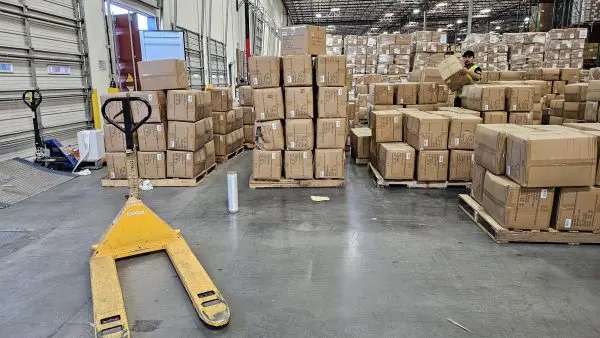
One seller’s warehouse recently had 2,000 to 3,000 Amazon return cartons stacked in a corner. The team only got to them when there was nothing else to do, while new product kept arriving from overseas.
A good share of that pile was sellable inventory the brand had already paid to make, ship, and receive.
Depending on the product, a return often needs nothing more than an inspection or a fresh poly bag before it goes back into stock. Products that are finished once opened need a clear disposal path instead of a corner of the warehouse.
Every return you put back into stock is a unit you don’t have to buy again.
Tactical bills reverse logistics hourly rather than per unit and connects directly with Seller Central for removals and returns, so inventory coming out of Amazon has somewhere to go and a team to process it.
RELATED: Amazon’s Bundle Policy Change Is a Q1 Inventory Problem
Know What a Unit Costs Before You Decide What to Do With It
Every call above depends on your landed cost per unit: freight, storage, prep, fees, and returns on top of what you paid the factory. Without it, you can’t tell whether a SKU is worth holding, removing, or liquidating.
Anyone who has sold on Amazon has opened a 3PL bill with 15 or 16 line items and had no idea what a unit actually cost to process. That’s why Tactical’s warehouse pricing is built per carton, and why the product landed cost calculator is free inside the warehousing portal.
WATCH: Product Landed Cost Calculator Walkthrough
Selling more doesn’t mean you’re making more. Q4 velocity makes almost every SKU look healthy, and the per-SKU math is the only place the difference shows up.
Before the November 15 snapshot
Sort your FBA inventory by age and make a sell, remove, or liquidate call on everything past 210 days. That single pass decides most of what your Q4 storage bill looks like.
The Tactical Takeaway
The fees that eat peak profit are predictable and dated, and almost all of them can be avoided with a decision made a month early.
- Pull the aged inventory report this week and flag every SKU past 210 days.
- Decide sell-through, removal, or liquidation for each one before November 15, and submit removals early.
- Set up a returns process before January so sellable units go back into stock instead of into a pile.
- Set a range for days of cover in FBA, with a floor above 28 days and a ceiling you hold to.
- In January, reconcile return cartons, restock what’s sellable, and recalculate margin per SKU with Q4 costs included.
If you want a second set of eyes on what should come out of Amazon and where it should go, book a call and the Tactical team will go through your aged inventory with you.