Most multichannel sellers did not spend much time reviewing their Multi-Channel Fulfillment (MCF) rate card a few years ago. In 2026, that changed.
Amazon added a 3.5% fuel and logistics-related surcharge to U.S. MCF fulfillment fees effective May 2, 2026, after announcing broader 2026 fulfillment fee increases for MCF, FBA, and Buy with Prime.
Around the same time, Amazon launched Amazon Supply Chain Services (ASCS), opening more of its freight, distribution, fulfillment, and parcel capabilities to businesses beyond marketplace sellers.
For brands selling across Amazon, Shopify, Walmart, TikTok Shop, and other channels, these updates change the conversation about shipping priorities. Is it more important to ship orders cheaply? Quickly?
As Amazon expands its role across the supply chain, here are some things to consider in regards to Amazon MCF and 3PL solutions.
2026 Amazon MCF Changes to Watch Out For
Several recent changes have made MCF more important to evaluate carefully:
- Amazon applies a 3.5% fuel and logistics-related surcharge to U.S. MCF fulfillment fees starting May 2, 2026.
- Amazon also increased MCF fulfillment fees in 2026, with average increases around $0.30 per unit, though the exact impact varies by item type and service level.
- The MCF Preferred Pricing program offers eligible high-volume sellers up to 15% off MCF fulfillment fees and up to $1 per unit in FBA credits.
- The 5% Amazon Logistics block surcharge is waived for MCF orders, including Walmart orders, through January 14, 2027.
- Ships in Product Packaging (SIPP) discounts can trim per-unit fees for qualifying items that ship in their original packaging.
- Amazon launched Amazon Supply Chain Services in May 2026, extending its freight, distribution, fulfillment, and parcel shipping capabilities to businesses of many types and sizes.
- Unbranded packaging is available for eligible MCF items, but it is not universal. Oversize and heavier products may not qualify, which can matter for orders going to non-Amazon channels.
- Amazon has also ended FBA prep and labeling services in the U.S. effective January 1, 2026, which shifts more prep responsibility upstream before inventory reaches Amazon’s network.
None of these developments automatically makes MCF the wrong choice, but combined, they make it more important to compare MCF with an independent 3PL based on channel mix, brand experience goals, and long-term operating flexibility.
How MCF Fits Into Amazon’s Broader Logistics Push
Amazon Supply Chain Services (ASCS) gives businesses access to more of Amazon’s logistics stack, including freight, distribution, fulfillment, and parcel delivery. That does not replace MCF, but it does make Amazon’s end-to-end logistics ambitions much more explicit.
For brands already using Amazon for storage and fulfillment, MCF can become one layer in a broader Amazon-managed operating model. That may be attractive for speed and convenience, but it also raises questions about concentration risk if too much inventory and fulfillment logic sits inside one provider’s network.
Amazon MCF vs. 3PL: Where the Trade-Offs Show Up
MCF and a 3PL can both fulfill non-Amazon orders. The more useful comparison is not whether both can ship a box, but which model gives the brand the right balance of automation, cost visibility, customer experience, and channel control.
This balance isn’t one-size fits all; each brand will require a different mix depending on their business goals.
Packaging and Brand Experience
Amazon promotes unbranded packaging for eligible MCF orders, which helps merchants ship marketplace-compliant orders outside Amazon-branded boxes. But MCF is still limited compared with a typical 3PL setup that can support custom packaging, inserts, kitting, and more controlled post-purchase branding across D2C channels.
RELATED: D2C Customization & Fulfillment: Tactical Logistic Solutions
Channel Compliance
Marketplace requirements can change, and sellers often need packaging and carrier workflows tailored to each channel. A 3PL typically offers more flexibility to configure channel-specific rules without relying on Amazon’s defaults or fee structure for non-Amazon orders.
Carrier Strategy
One of the biggest differences is routing control. A 3PL can usually shop among multiple parcel carriers and service levels, while MCF is built around Amazon’s fulfillment network and operating rules.
Inventory Control
Brands using Amazon heavily for fulfillment may gain convenience, but they also place more inventory and execution logic inside Amazon’s system.
A hybrid setup with a 3PL can provide outside inventory buffers, alternate routing options, and additional resilience when inbound timing, packaging requirements, or channel needs shift.
Human Support
MCF is optimized for scale and standardization. A 3PL relationship often adds hands-on operational support for exceptions, promotions, custom projects, and edge cases that do not fit a self-serve workflow.
At Tactical, this is our major differentiator: hands-on, human experience designed to deliver confidence at every step of your logistics journey.
Cost: When MCF Helps and When It Tightens Margins
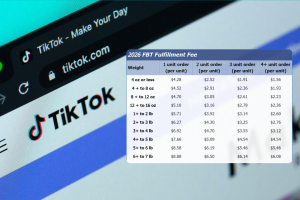
For lower volumes or simpler non-Amazon programs, MCF can still be efficient because it lets sellers use inventory already inside Amazon’s network. MCF tends to be most competitive on light, single-unit orders shipping to East Coast destinations. The published MCF rate card lists fulfillment for a small standard 4 oz or less order at $7.34 for a one-unit order, dropping to $3.64 per unit at four-plus units, before the 3.5% surcharge. For tail-volume orders or lighter D2C SKUs that turn quickly, that math can work.
At higher multichannel volumes, the economics deserve closer scrutiny. The same rate card shows pricing scales hard against MCF as unit count and weight grow. Multi-unit orders, items above three pounds, and orders shipping to West Coast destinations often run cheaper through an independent 3PL (such as Tactical) once carrier flexibility and zone-skipping are factored in.
Storage is the variable most sellers underestimate. Amazon’s 2026 storage rates for standard-size non-dangerous goods run $0.78 per cubic foot from January through September and jump to $2.40 per cubic foot from October through December. For inventory that sits for more than a month, those costs compound. Inventory reserved for non-Amazon channels can become expensive inside Amazon if it sits waiting for Shopify, Walmart, or TikTok Shop demand to clear it.
Sellers need to account for base MCF fee increases, the 3.5% surcharge, packaging limitations, storage exposure, and the strategic cost of concentrating more fulfillment activity inside Amazon’s network rather than assuming MCF will remain the lowest-friction option indefinitely.
Why Many Brands Keep a 3PL in the Mix
For many growing brands, the practical answer is not Amazon or 3PL. It is Amazon and 3PL.
That hybrid approach lets Amazon support the parts of the operation where its network is strongest, while a 3PL handles branded D2C fulfillment, channel-specific compliance, custom packaging, prep work, and inventory that should remain outside Amazon’s system.
As Amazon expands its supply chain offering, that independent control layer can become more valuable, not less.
Where SplitSmart by Tactical Fits In The Equation
For brands that want to stay Amazon-compatible without becoming Amazon-dependent, SplitSmart can fit into a hybrid model as an inbound distribution layer for FBA-bound inventory.
Paired with D2C and omnichannel fulfillment through an independent 3PL, that model can help brands move inventory into Amazon efficiently while keeping non-Amazon fulfillment logic, branding, and overflow capacity outside Amazon’s network.
That positioning is stronger when framed as operational control rather than anti-Amazon messaging. For many sellers, the issue is not whether Amazon is useful. It is whether Amazon should run every important part of the supply chain.
Tactical Takeaway: Every Seller Has Different Needs
Amazon MCF remains a useful tool, especially for sellers that want fast access to Amazon’s fulfillment infrastructure for non-Amazon orders. The best MCF fit is usually a D2C-leaning seller with average orders of two to three units, products in the one-to-two-pound range, lighter goods like paper products or small consumables, short storage cycles, and East Coast customer concentration. For that profile, MCF can be the cleanest option. But in 2026, it should be evaluated as part of a broader logistics strategy rather than treated as a neutral plug-in for every channel.
For brands running serious D2C and omnichannel volume, the better question is usually not whether MCF works; it’s where MCF belongs, and where an independent 3PL provides better control over customer experience, routing, prep, and inventory flexibility.
The strongest case for a 3PL is usually multi-unit average orders, heavier or oversized items, West Coast distribution needs, longer storage cycles, and custom packaging or kitting requirements.
Your D2C & Amazon Fulfillment Action Plan for 2026
- Audit MCF use by channel and SKU, including the effect of 2026 fee increases and the 3.5% surcharge.
- Separate low-volume coverage from growth-channel fulfillment so high-priority D2C and marketplace programs are not forced into one operating model.
- Model storage cost per unit per month using actual SKU dimensions and sell-through timing, especially heading into Q4 when standard-size storage rates jump from $0.78 to $2.40 per cubic foot.
- Review which SKUs qualify for unbranded packaging and SIPP discounts, and which do not, especially for orders leaving Amazon’s marketplace.
- Confirm who will handle prep and labeling now that Amazon has ended those services in the U.S.
- Decide deliberately where Amazon adds leverage and where an outside 3PL adds control.
Get Started with Tactical Logistic Solutions
Tactical Logistic Solutions supports brands that need Amazon-compatible fulfillment without giving up flexibility across Shopify, Walmart, TikTok Shop, and other channels. That includes D2C fulfillment, omnichannel order management, Amazon prep support, returns handling, and inventory strategies that work alongside Amazon instead of defaulting entirely to it.
For brands reassessing where MCF fits in 2026, the most useful next step is a channel-by-channel review of cost, packaging requirements, prep needs, and inventory placement before the next fee change or volume spike forces a decision.
Book time with the Tactical team here to review your current setup: Tactical Team Calendar.