
I spent a few days at Amazon Accelerate in Seattle last week, and there were plenty of announcements worth talking about. One in particular changed the way I looked at almost everything else Amazon presented.
Amazon wants Seller Central to become the place you run your entire e-commerce business, not just your Amazon business.
That is not my interpretation of some vague keynote language. Amazon explicitly says it is working toward a future where Seller Central becomes the single place independent sellers manage their businesses across every channel where they sell. Once you look at the rest of Accelerate through that lens, a lot of the other announcements start to fit together.
Seller Central Goes Multichannel
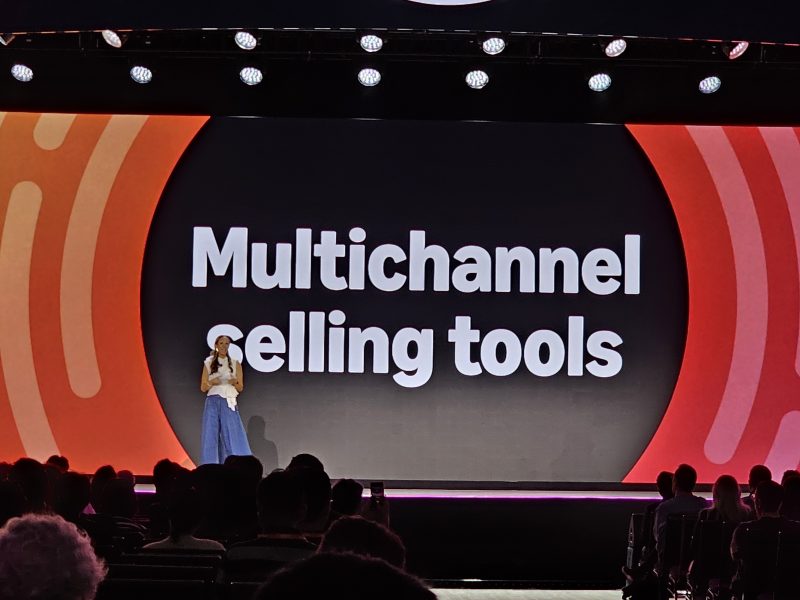
Amazon’s new multichannel selling tools allow sellers to connect Walmart, Shopify, TikTok Shop, and eBay directly to Seller Central, alongside Amazon. Listings, orders, fulfillment, sales data, and eventually profitability can live in one connected workspace. Amazon says sellers will also be able to update product information once and have it adapted for different marketplaces instead of manually managing every listing separately.
Amazon also introduced Multichannel Distribution, which extends its logistics network beyond direct e-commerce fulfillment to support inventory moving across online channels, retail locations, and purchase orders.
The pitch onstage was straightforward. Natalie Angelillo, Director, External Relations at Amazon, talked about helping sellers “succeed anywhere that you choose to sell.” Then Meredith Bunche, Director of Marketing and Revenue Management, Multichannel Commerce and Fulfillment at Amazon, put the strategy even more plainly: “It should be just as easy to grow your business off Amazon as on.”
There is a lot to like about that. For sellers managing five marketplaces, five dashboards, multiple inventory pools, and a reporting spreadsheet that someone inevitably has to fix at the end of every month, consolidation can be genuinely useful. Amazon says more than 95% of its independent sellers already sell across multiple channels.
At the same time, the tradeoff is hard to ignore. The more functions you consolidate inside Amazon, the more Amazon becomes infrastructure for your entire business, including the parts that have nothing to do with selling on Amazon. That deserves some thought.
Now Add Seller Assistant
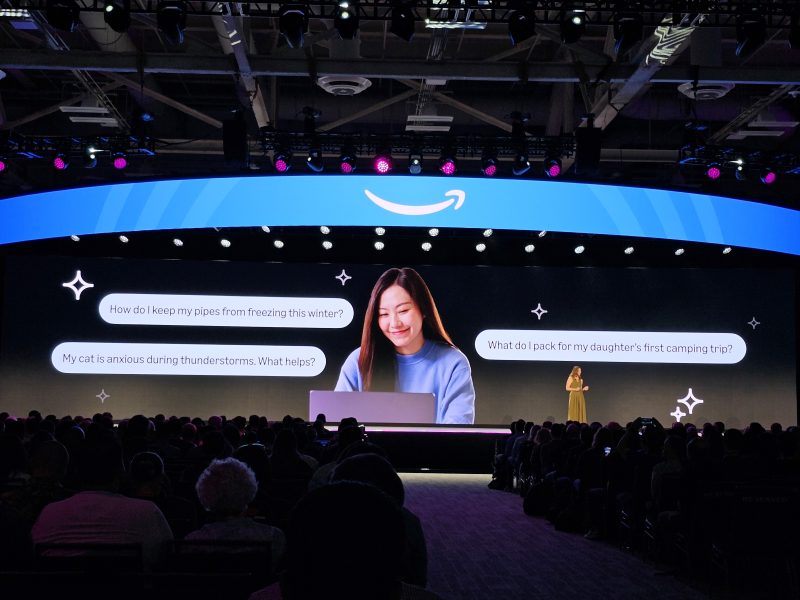
The first general session pushed that same idea even further. Christopher Jones, Director, Seller Assistant at Amazon, presented Seller Assistant around four core capabilities: selling expertise, memory, monitoring, and autonomy. The language I kept hearing throughout the presentation centered on intelligence, context, personalization, and speed.
Seller Assistant can understand your business, remember previous information, continuously monitor what is happening, model different scenarios, recommend actions, and increasingly take those actions on your behalf. Jones demonstrated Seller Assistant modeling multiple growth scenarios and proposing different approaches based on what it already understood about the seller and the business. He described the broader ambition as creating “one intelligent system for your entire business.”
Then Eric Burns, Applied AI Field CTO at Anthropic, joined Jones to talk about the collaboration behind the technology. His framing was simple: “The whole game is context.” That point matters because the more Seller Assistant understands about your inventory, products, advertising, profitability, historical decisions, preferences, and goals, the more useful it can theoretically become.
Burns described the goal as AI that empowers people, with Seller Assistant effectively becoming a “team of experts” equipped with enough context to help a seller make better decisions. That all sounds useful, but the phrases I kept writing down throughout the session were slightly different. Amazon repeatedly emphasized actions happening “on your behalf” and “for you, automatically.”
Katie Scott, Director, Selling Partner Communities at Amazon, demonstrated how AI and Seller Assistant are being incorporated into advertising, including auto-optimization that “keeps working after you close your laptop.” Claire O’Donnell, VP, Selling Partner Trust & Store Integrity at Amazon, described an experience where Amazon increasingly remembers information instead of requiring sellers to repeatedly provide it: “We never want you to have to give us the same info twice.”
Taken together, the direction is pretty clear. Amazon wants Seller Assistant to require less manual input, retain more context, monitor more of the business, make more recommendations, and execute more work automatically. That could be extremely useful. It also raises a much bigger question: If Amazon owns the marketplace, fulfillment network, operating dashboard, business data, and increasingly the layer making and executing decisions, where exactly does seller leverage live?
The Bigger Play: Amazon Is Becoming Your Entire Infrastructure
I do not think the takeaway is that Amazon is trying to make sellers obsolete. I think something subtler, and probably more consequential, is happening. Amazon is systematically absorbing functions sellers historically needed people, agencies, SaaS platforms, and internal teams to perform, including reporting, listing management, inventory planning, advertising optimization, fulfillment, compliance, business analysis, and increasingly decision-making itself.
Now put that next to the multichannel announcement. Seller Central can increasingly see your Amazon business, your Walmart business, your Shopify business, your TikTok Shop business, your inventory, your fulfillment, your advertising, and your profitability. Sitting across that increasingly complete dataset is an AI assistant designed to remember, monitor, recommend, and act.
That is where I think the two biggest Accelerate announcements become one story. Amazon is making a case for becoming the infrastructure underneath your entire commerce operation. For sellers, that could remove a tremendous amount of expensive, repetitive work. It could also make leaving Amazon’s ecosystem considerably harder.
Convenience vs. Control
This is the control conversation we keep coming back to. Some of these tools look genuinely useful, and consolidating repetitive operational work can absolutely make a business more efficient. The decision deserves a closer look because Amazon could become your marketplace, fulfillment network, inventory system, multichannel dashboard, advertising engine, business intelligence layer, and increasingly autonomous operator.
That does not automatically make consolidation bad. It simply makes the decision more important. The real question is: What should Amazon manage for you, and what do you still want to control yourself?
Use the infrastructure where it makes your business better. Automate the work that does not need a human. Consolidate where consolidation actually saves money. Just make sure you still know which levers you control if you ever need to pull them yourself.