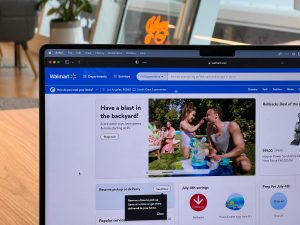
Walmart is currently paying sellers to launch. The New-Seller Savings program runs through January 31, 2027 and is worth up to $75,000 per seller:
| First-Year GMV on Walmart | Base Referral Fee Discount |
|---|---|
| Your first $50,000 | 20% off |
| $50,000 to $500,000 | 30% off |
| Above $500,000 | 40% off |
- Up to $2,000 in WFS credits plus 10% off fulfillment fees
- Up to $1,000 in search engine marketing credits and up to $500 in Walmart Connect ad credits
Read where the money actually sits. The referral fee discount is the largest piece by a wide margin, and it scales with GMV. Walmart is not subsidizing your setup costs. It is subsidizing your sell-through, which means the offer is worth exactly what your inventory position lets you earn against it.
Selling on Amazon Does Not Disqualify You
This is the objection that stops most sellers before they check, and it is backwards. Walmart built these incentives to pull established sellers off other marketplaces. Being an active or top-tier Amazon seller does not disqualify you from anything.
“New seller” means new to Walmart, and the eligibility criteria are narrow:
- You do not have an existing, active Walmart Marketplace account
- You apply, get approved, and go live between February 1, 2026 and January 31, 2027
- You click the opt-in button in Seller Center after your account goes live
That last one is where sellers lose the money. The savings are not applied automatically. Nothing happens until you opt in.
Your Amazon history is an asset in the application, not a liability. Walmart pre-screens applicants to protect marketplace quality, and it is looking for an established e-commerce track record, a high-quality product catalog, and reliable fulfillment history. Bring your Amazon performance metrics to the application and you are handing the reviewer exactly what they are screening for. Strong numbers speed up approval.
Why Now Is the Moment to Take Walmart Seriously
Walmart U.S. eCommerce sales grew 24% in the quarter ended July 31, 2026, with marketplace named as one of the drivers. This is no longer a channel you test in case it works. It is a channel that is compounding while the discount window is open.
The strategic case is simpler than the financial one. Amazon is a channel, not a supply chain. Any brand running one marketplace is running one point of failure, and that exposure surfaces in the quarter you least want it: a listing suppression, a category audit, a placement change, a stockout during peak. A second marketplace with its own fulfillment network and its own customer base is operational insurance that also happens to produce revenue.
The window and the season line up. Sellers who go live this fall get a Q4 demand signal, real velocity data, and the discount running through their strongest quarter. Sellers who wait until January get the same discount for four weeks and no peak-season read on the channel.
RELATED: Walmart Marketplace in 2026: AI and Fulfillment Growth Drive Battle vs. Amazon covers how Walmart’s AI discovery and seller performance standards have changed what it takes to rank there.
Splitting One Inventory Pool Across Two Marketplaces Is Where Launches Break
A Walmart launch is an inventory decision before it is a listing decision. Most Amazon sellers who stall on Walmart did the listing work correctly. What they never built was an inventory position capable of supporting a second marketplace, so the channel went live, ran out of units, and quietly flatlined.
Start with the assortment, and pick it by production depth rather than catalog size. Every SKU you list on Walmart is a SKU you now have to keep in stock in two places, on two replenishment cycles, with two sets of lead times. Launch with the SKUs that have proven velocity on Amazon and enough supply to hold both channels through Q1.
Then solve the pool. Units you commit to WFS are committed to Walmart. Units you commit to FBA are committed to Amazon. Neither network hands inventory back quickly when the other channel runs hot. So when a seller funds a Walmart launch off the top of an existing FBA buffer, the launch works and the Amazon listing goes thin at the same time. You traded rank on the channel paying your bills for a channel that has not proven itself yet.
The version that works uses a third pool. Inventory sits at a 3PL, and that pool feeds FBA, feeds WFS, and ships direct-to-consumer and seller-fulfilled marketplace orders in between. You decide weekly where units go, instead of committing them to one marketplace months ahead of demand and hoping the forecast holds. That buffer is also what makes the launch reversible. If the channel underperforms, you have not stranded a quarter of inventory inside a fulfillment network you are still learning.
RELATED: Walmart WFS Holiday Inventory Dates for 2026 Peak Season covers the peak arrival windows and how to plan inbound timing backward from them.
Your 3PL Can Ship Directly Into WFS
You never have to touch the inventory yourself. Sending WFS shipments straight from your 3PL is the standard workflow at volume, and the whole job is inbound compliance. Walmart rejects noncompliant shipments and charges for the trouble, so the labeling and the appointment are where this succeeds or fails.
The handoff runs in four steps:
- Create the inbound shipment. You build the shipment plan in Walmart Seller Center under the WFS inventory portal, which generates your SKU labels and shipping labels.
- Send the labels to your 3PL. Download the PDFs for item barcodes, box labels, and pallet labels, and get them to your account manager.
- Prep and pack. Your 3PL applies the WFS barcode to each individual unit and groups them into master cartons or pallets.
- Schedule the carrier. Small parcel means printing the Walmart-partnered FedEx labels and handing boxes to the driver. LTL means your 3PL books the freight carrier and schedules a delivery appointment at the assigned fulfillment center through Walmart’s appointment scheduler.
Getting this right is what earns the delivery promise, and the promise is the asset. Items carrying the Fulfilled by Walmart tag with a delivery estimate of two days or less averaged 50% GMV growth between June 2024 and June 2025.
Tactical is a Walmart approved solution provider and an Amazon Service Provider Network partner. Both marketplaces have formally recognized the same logistics operation, which is the point. Freight lands at a Tactical hub in New Jersey, Texas, or California. WFS replenishment ships out of that pool on Walmart’s arrival schedule. FBA inbound ships out of the same pool on Amazon’s. Walmart seller-fulfilled orders, Shopify orders, and TikTok Shop orders ship from the remaining units the same week they are placed.
Rank protection matters most during a launch quarter. Running a seller-fulfilled offer alongside your marketplace inventory means that when fulfillment inventory runs thin or sits in transfer, the listing stays live and the ranking survives instead of resetting.
The Tactical Takeaway
Walmart is buying new sellers right now, your Amazon account does not disqualify you, and the window closes January 31, 2027. The brands that capture the full value of it will be the ones who treated the launch as a supply chain project with a listing component, rather than a listing project with a supply chain problem attached.
Amazon is a channel. Walmart is a channel. The inventory position underneath both of them is the business.
Your Walmart Launch Checklist
- Apply with your Amazon numbers in hand. Track record, catalog quality, and fulfillment history are what the pre-screen is looking for.
- Confirm your go-live lands inside the window, and set a reminder to click opt-in in Seller Center the day your account goes live.
- Pick the launch assortment by production depth, not catalog size. Proven velocity plus enough supply to hold both channels through Q1.
- Build the buffer before the listings. Decide how many weeks of cover sit at a 3PL and can move to either marketplace.
- Send your 3PL the WFS label PDFs before the first shipment plan, and confirm they can book fulfillment center appointments for LTL.
- Run a seller-fulfilled offer alongside WFS from day one so a stockout costs you units instead of rank.
Walmart Launch Planning
Tactical runs Amazon inbound, Walmart fulfillment, and D2C out of one inventory pool across three U.S. hubs.
If you are planning a Walmart launch for Q4 or Q1, book a call and we will map the inventory side of it before you commit units.